

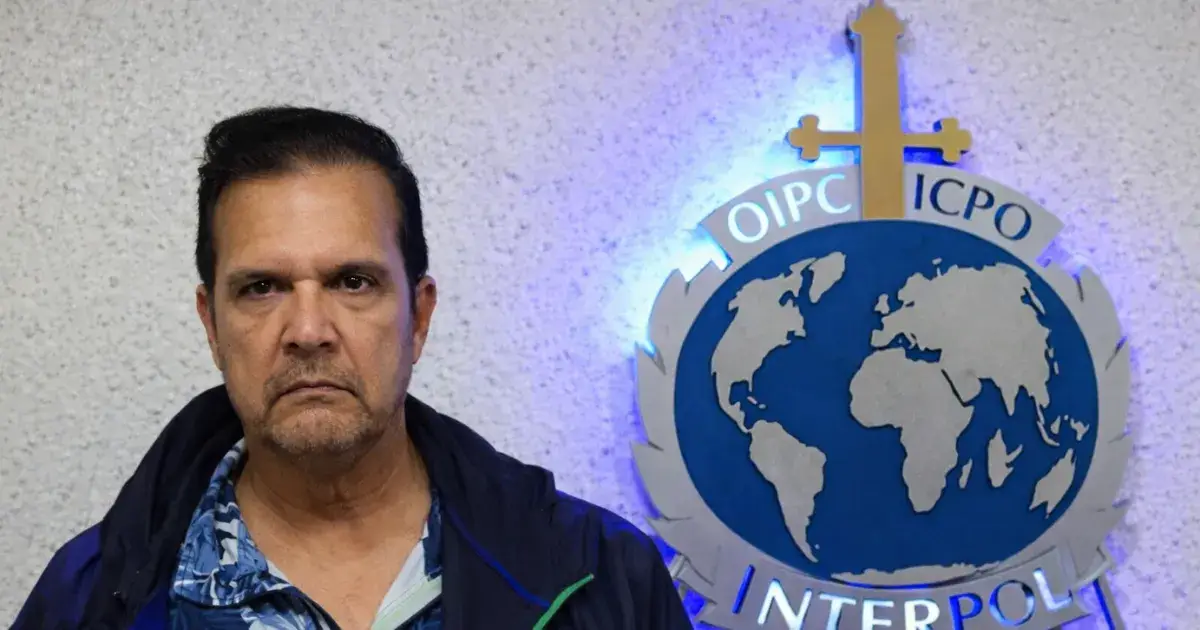
The “Fat Leonard” scandal is one of those stories that refuses to fade because it sits at the messy intersection of power, money, and access. A defense contractor built relationships inside the U.S. Navy, then turned those relationships into leverage. Years later, the case still ripples through courts, careers, and public trust.
What makes this scandal different is not just the headline-grabbing details. It’s the system-level lesson: when procurement, logistics, and oversight get too cozy, even a disciplined institution can be steered. That is why the story keeps returning, long after the first arrests and guilty pleas.
And right now, it’s still active. Sentencing, appeals, and continuing fallout keep pushing the scandal back into the news cycle, reminding everyone that the consequences of corruption can take a decade to fully unwind.
Who “Fat Leonard” Was and Why the Navy Needed Him
Leonard Glenn Francis ran a port-services business that supported U.S. Navy ships in the Pacific. The work itself sounds routine: arrange supplies, tugboats, waste removal, fuel-related logistics, and port coordination. But the “routine” nature is exactly what made it vulnerable. If someone can influence where ships dock and what vendors get used, that control becomes profitable fast.
The business model behind the influence
Francis’s leverage wasn’t built only on cash. It came from being useful, being present, and appearing indispensable. When a contractor becomes the person who “fixes problems,” relationships form quickly. Over time, favors become expectations, and expectations become pressure. In environments where deployments are stressful, shortcuts can start to feel normal. That’s where ethical lines begin to blur.
How access turned into advantage
Once access existed, it created information value. When insiders share schedules, port calls, or operational preferences, a vendor can plan better than competitors. That advantage helps win business, justify pricing, and shape decisions quietly. Even small leaks can compound into major financial benefit when multiplied across ship visits, contract scopes, and years of repeat work.
The key vulnerability: logistics and oversight gaps
Logistics is often treated as support, not strategy. Yet it involves budgets, contracting, reimbursements, and approvals. If oversight is weak or delegated too casually, inflated invoices can slip through. And if a contractor can influence who signs off, the paper trail looks legitimate. That’s why this scandal became so large before the full pattern was recognized.
How the Bribery Scheme Worked in Real Life
The scandal’s core allegation was simple: bribes and luxury favors were exchanged for inside help. But the real mechanism was a repeating loop. A contractor provided perks, the perks created loyalty, and that loyalty translated into decisions that benefited the contractor. Eventually, “helping out” became an expectation, not a one-time lapse.
Why “favors” are so hard to stop
Many corruption schemes hide behind ambiguity. A dinner can be “networking.” A hotel can be “hospitality.” A gift can be “customary.” The problem is not a single event, but the accumulated relationship debt. Once someone accepts enough, it becomes harder to say no. And once multiple people are involved, silence becomes a shared survival strategy
Read This Blog:"Meghan Markle News Update: What She’s Focused on Right Now"
The role of inflated billing and steered port calls
A major payoff of influence is steering demand. If ships are directed toward certain ports or service providers, revenue becomes predictable. Then, inflated billing becomes the second layer: charge above market rates, add questionable line items, and rely on friendly approvals. Over time, the scheme functions like a hidden tax on the system, paid by taxpayers.
Why the scheme spread across ranks
This wasn’t limited to one person and one accomplice. Large scandals tend to spread because the benefits are distributed. When multiple individuals gain something (money, status, perks, career favors), the network becomes resilient. Each participant rationalizes their role as “minor,” while the system-wide damage becomes massive.
The Timeline That Keeps Getting New Chapters
People often think scandals end when someone pleads guilty. In reality, the court process is long, especially when many defendants, evidence trails, and competing narratives are involved. The Fat Leonard timeline is a reminder that legal outcomes arrive in stages: investigation, pleas, trials, sentencing, and appeals.
The guilty plea that opened the floodgates
Francis pleaded guilty years ago, and that plea helped investigators map how the favors worked and who benefited. Once a central figure cooperates, the case stops being a rumor and becomes a structured investigation. That shift changes everything: it creates documents, testimony, and a legal record that other defendants must face.
The escape that shocked the public
In 2022, Francis cut off an ankle monitor and fled ahead of sentencing, turning a corruption case into a fugitive story. It reinforced public frustration: a person accused of major wrongdoing seemed to slip through the cracks at the exact moment accountability was supposed to land.
The return to U.S. custody
Francis was later returned to the United States after being held in Venezuela, bringing the case back to center stage. The return mattered legally because it restored the ability of U.S. courts to proceed fully. It also mattered symbolically, because the case had started to look like it might never reach a final reckoning.
Sentencing, Prison Time, and the New Wave of Appeals
Even after a sentence is issued, the story can continue. Appeals, procedural issues, and arguments about fairness can reopen public attention. In late 2024, Francis received a 15-year prison sentence, which is substantial, but not necessarily the final word if appellate courts get involved.
What a 15-year sentence signals

A long sentence can be read as the court emphasizing seriousness and deterrence. It’s not only about one defendant, but about sending a message to institutions that rely on trust. When a scandal stains a major branch of the military, the punishment often aims to restore credibility as much as it aims to penalize misconduct.
Why he’s asking for a reduction now
In December 2025 reporting, Francis sought relief in the Ninth Circuit, arguing his sentence should be thrown out or reduced. This matters because appellate arguments can reshape not just his outcome but how related cases are viewed. It also keeps the scandal in headlines, creating a renewed public debate about accountability and consequences.
The ripple effect on other cases
Large corruption cases involve many connected outcomes. One sentencing can influence cooperation incentives, timing for other defendants, and public narratives. Even when courts keep decisions narrowly focused, the broader scandal is being watched by everyone involved. That attention can change strategy, settlements, and how institutions handle internal discipline going forward.
How the Scandal Changed Navy Culture and Compliance
The Navy didn’t just face a criminal case; it faced a credibility test. When corruption touches operational decisions and procurement spending, it challenges the public’s assumption that military institutions self-police effectively. The response has required training, tighter compliance efforts, and new ways of thinking about vendor relationships.
Procurement rules are only as strong as enforcement
Most organizations already have policies that prohibit gifts and conflicts of interest. The issue is enforcement consistency. If leaders treat rules as paperwork, people follow the tone, not the text. The scandal highlighted that compliance is a living system: it needs audits, real consequences, and leadership buy-in, not just annual training slides.
The human factor: pressure, fatigue, and rationalization
Corruption rarely begins with someone saying, “I’ll betray my institution.” It starts with justifications: “Everyone does it,” “It’s harmless,” “We needed help,” or “It didn’t change anything.” Under deployment stress and constant deadlines, rationalization becomes easier. That doesn’t excuse it, but it explains why rules must anticipate human weakness.
Rebuilding trust takes longer than prosecutions
Even after convictions or pleas, confidence doesn’t bounce back quickly. Public trust depends on visible reform and sustained transparency. Internally, trust depends on personnel believing standards apply equally to everyone. When a scandal is famous, the institution must show it learned from it, or else every new misconduct story gets compared to the old one.
Why “Fat Leonard” Still Matters in 2025 and Beyond
This scandal keeps resurfacing because it’s a template for how influence can quietly capture systems. It also remains relevant because defense contracting and logistics are still global, complex, and high-stakes. Wherever large budgets meet limited oversight, the risk returns unless controls evolve.
It’s a lesson about contractor dependency
When an organization depends too heavily on one vendor or one “problem solver,” risk concentrates. Diversifying vendors, rotating assignments, and stress-testing procurement decisions can reduce that dependency. The goal is not to treat contractors as enemies, but to ensure relationships never become so close they weaken professional judgment.
It shows how “soft corruption” becomes hard crime
Many scandals begin with gifts and favors that feel informal. Over time, those favors build expectation and influence, and eventually turn into explicit exchanges. By the time investigators arrive, what started as “hospitality” looks like a long-running bribery pattern. That is why clear boundaries must be enforced early.
It will keep generating headlines
As long as appeals and related outcomes continue, the scandal remains newsworthy. The public also stays interested because it’s not just a legal drama; it’s a story about how an institution with immense responsibility can still be manipulated. Each new filing or ruling becomes another chapter, not an epilogue.
Key takeaways you can’t ignore
- How influence was built through access, favors, and dependency
- Why logistics and contracting are high-risk zones for corruption
- How a single scheme can spread across ranks and units
- Why court timelines stretch for years, especially with many defendants
- How appeals can revive a story long after sentencing
Key Points Table
| Key Point | What It Means | Why It Matters |
| Vendor influence can grow quietly | Relationships become leverage over time | Early boundaries prevent long-term capture |
| Logistics is a corruption “hot spot” | Budgets + approvals + pressure create openings | Oversight needs to match the financial risk |
| Scandals don’t end with guilty pleas | Sentencing and appeals keep cases alive | Public trust is rebuilt slowly |
| Accountability is both legal and cultural | Courts punish, institutions must reform | Reforms must be visible and sustained |
| Dependency on one contractor is dangerous | “Indispensable” vendors can shape choices | Diversification reduces risk |
Conclusion
The Fat Leonard scandal is a cautionary tale that still feels current because it reveals how quickly standards can slip when convenience and access go unchecked. It wasn’t only about one contractor’s behavior. It was about how a network of decisions, favors, and weak oversight created a system that could be exploited repeatedly.
And even now, the story isn’t finished. With ongoing legal developments and appeals, the scandal continues to evolve, keeping pressure on the Navy and the justice system to prove that accountability is real, consistent, and stronger than the incentives that fueled the misconduct in the first place.
FAQs
What was the Fat Leonard scandal?
It was a major U.S. Navy corruption case involving bribes and luxury favors exchanged for inside help that benefited a defense contractor’s business operations.
Why is it still in the news?
Because major cases take years to fully resolve, and appeals and court actions can keep changing what happens next.
Did Fat Leonard go to prison?
He was sentenced to 15 years in prison in late 2024, though he has pursued further legal challenges afterward.
What made the scheme possible?
Weak oversight in logistics and contracting, combined with personal relationships and repeated “favors,” created a pattern that grew over time.
What’s the big lesson from the scandal?
Clear ethics rules are not enough by themselves. Institutions need enforcement, audits, and leadership accountability to prevent influence from becoming corruption.

My Name is George
I am a creative content writer who specializes in crafting Unique and engaging captions for all Social media platforms. I focus on originality and trends to Create Captions that boost engagement and make every post stand out.
Thanks For Visiting My Blog 😇