

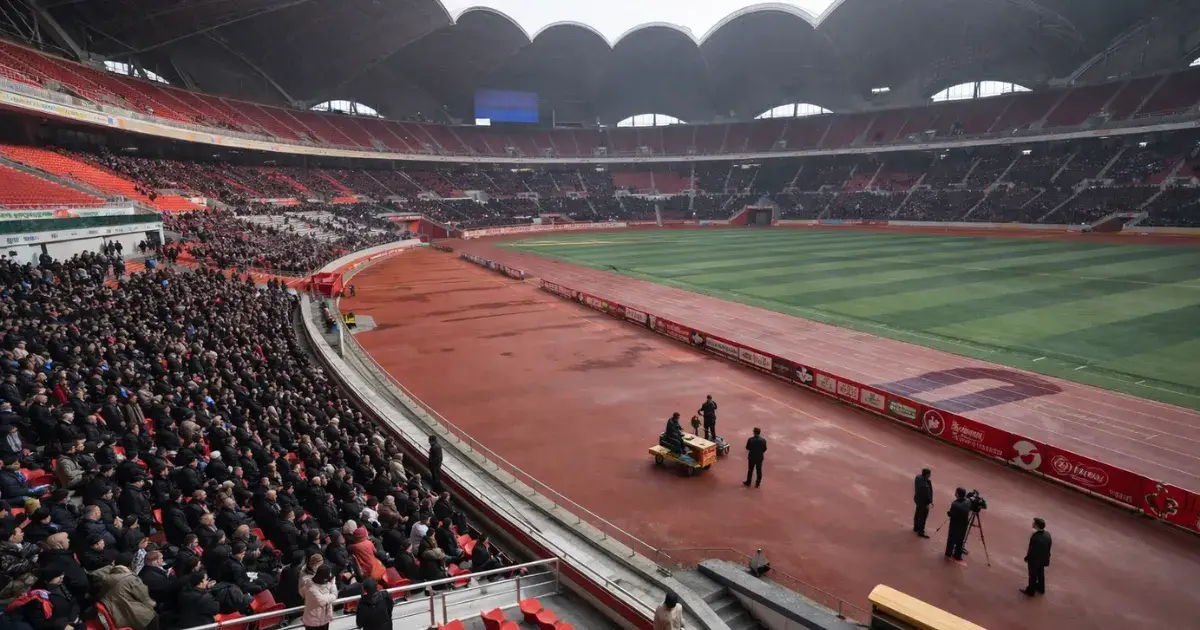
Rungrado 1st of May Stadium sits on Rŭngrado Island in Pyongyang, and it’s famous for one simple reason: scale. With an official capacity often listed at 114,000, it’s regularly described as one of the world’s largest stadiums by seating.
But size alone doesn’t explain the obsession. This venue feels like a statement built in concrete and steel, from its flower-like roofline to its layered interior levels. It’s a stadium designed to be seen, remembered, and talked about long after the crowd goes home.
If you’re searching for a “tour,” the reality is different from a typical ticketed walk-through in London or Barcelona. For most people, the tour is a guided story: what it looks like, how it was built, what it hosts, and why it remains one of sport’s most intriguing mega-venues.
Where the Stadium Sits and Why It Matters
Rungrado 1st of May Stadium is located on Rŭngrado (Rungra) Island in Pyongyang, set along the Taedong River. The placement gives it natural “showpiece” energy, since it can be framed by water and skyline views in a way inland venues can’t. It also reinforces the stadium’s role as a national landmark, not just a match-day location.
Rŭngrado Island as a “sports district” concept
Rŭngrado is known for leisure and sports spaces, and the stadium’s footprint dominates that identity. This isn’t the typical “arena tucked into a neighborhood” story. It’s closer to a destination complex, built to host huge events and large movements of people, with the island acting as a natural buffer zone.
The psychology of an island venue
Island venues change how crowds feel. Approaches, bridges, and open stretches create a sense of anticipation before you ever see the gates. That matters for big sports ceremonies and national spectacles because the journey becomes part of the experience, like a long runway leading to a stage.
First Impressions: The Roof That Looks Like a Flower
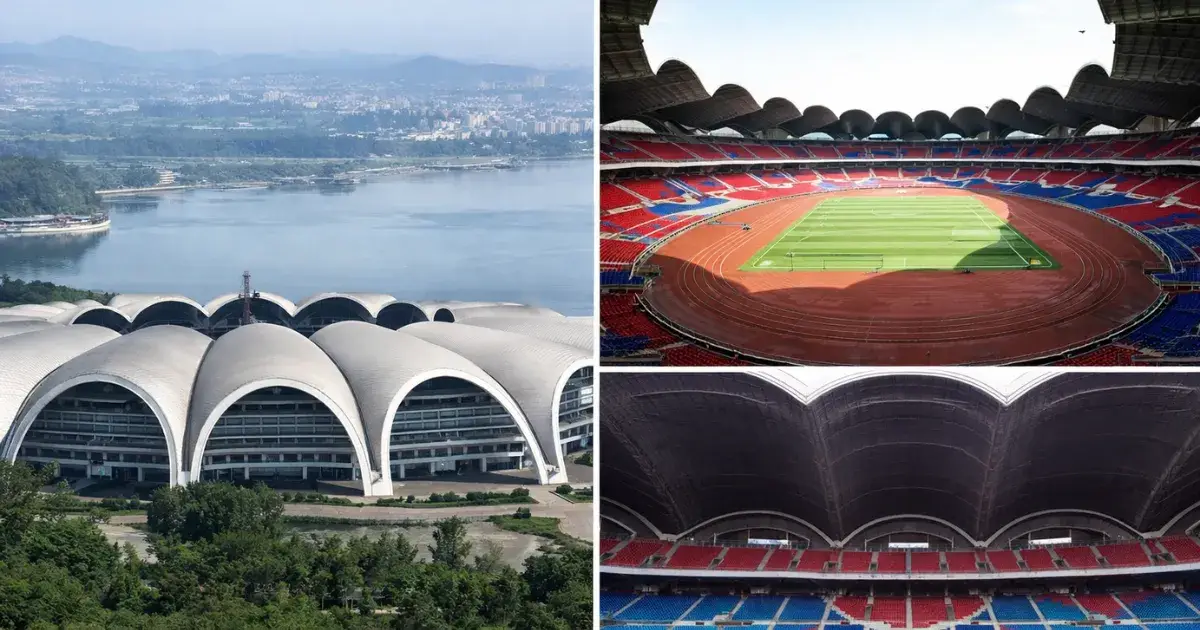
The stadium’s most recognizable feature is its scalloped roof, built with 16 arches arranged in a ring. Many descriptions compare it to a magnolia blossom, which makes the building look softer than it is, especially from above. That contrast is part of the magic: delicate shape, massive scale, and a silhouette that doesn’t resemble most modern bowls.
Why 16 arches changes the whole look
Sixteen repeating roof “petals” create rhythm, and rhythm reads as intentional design rather than brute force engineering. It also breaks up the stadium’s mass, so instead of one giant circle, your eye catches individual segments. That makes photos instantly recognizable, even when you only see part of the roofline.
A stadium built to be photographed from distance
Some venues are best experienced from a seat. Rungrado is also built for the long view, where the roof and scale can be taken in at once. That’s why aerial descriptions matter so much in how people “tour” it mentally. The exterior form is a headline, not a footnote.
The Numbers That Make It Hard to Believe
Rungrado’s statistics are the kind that make even big-stadium fans pause. It occupies a large site area and is frequently discussed as a global giant by capacity. Official figures commonly cite 114,000 seats, while older references have mentioned higher numbers before seating changes. These shifts are part of the stadium’s modern story, not a minor detail.
Read This Blog :"AirPods 1st Gen Review Today: What They Still Do Surprisingly Well"
Capacity: why you see different figures online
One reason capacities vary is seating configuration. The stadium is often described as originally having a higher capacity, while later remodel work replaced portions of bench-style seating with individual seats, reducing the practical count. Some sources also note it may be expandable for certain events, which adds to confusion.
Space inside: eight levels and a huge interior footprint
Rungrado is commonly described as spanning eight stories/levels, with extensive interior space and many rooms used for operations and event support. That’s important because it’s not just a shell around a pitch. It’s a complex building designed to function like a small city during major events.
A Tour in Your Head: How to “Walk” the Stadium
Because access is limited for most travelers, a Rungrado “tour” is best understood as a structured way to imagine the venue. Start outside with the roofline, then move inward to seating tiers, then down to the pitch, and finally into the interior rooms and corridors that keep a mega-event running smoothly. This mental map makes the stadium easier to grasp.
What you’d notice first on arrival
The first feeling is scale, then geometry. The roof segments pull your eyes upward, while the bowl shape makes the base feel endless. Most large stadiums try to hide bulk with sleek cladding. Rungrado does the opposite. It leans into monumentality, which makes even simple entrances feel ceremonial.
What the pitch and bowl layout suggest
Rungrado is described as a multi-purpose stadium used for football and other events, and the bowl design fits that role. Mega-venues like this typically prioritize sightlines for mass choreography as much as sport. So even when football is the headline, the geometry hints at a broader purpose: spectacle at scale.
Mid-tour checklist
Here’s a quick “tour list” people use to understand what makes Rungrado unique:
- Roof design and 16-arch “petal” structure
- Official seating capacity and why it changed
- Renovation timeline and what was updated
- Biggest events hosted, sport and non-sport
- Why it’s talked about as much as it’s seen
What It Hosts: Football, Festivals, and Mega-Events
The stadium is used for football matches and large-scale performances, including mass games commonly associated with the Arirang tradition. For sports fans, that mix is the hook. It’s not just a home for a club atmosphere, chants, and rivalry nights. It’s also built for coordinated displays that can involve enormous numbers of participants.
Football at Rungrado: national-level symbolism
Rungrado has been linked with the North Korean national teams and high-visibility fixtures. In many countries, a national stadium becomes the place for symbolic matches. Here, that symbolism is amplified by the venue’s size and its association with state-scale events, which makes even ordinary fixtures feel “bigger” by context alone.
The Arirang Mass Games effect
Arirang-style mass games are known for synchronized performances and vast visuals, historically staged in this stadium. Reports and references often cite participation numbers that reach into the tens of thousands, which is partly why Rungrado is so closely tied to the idea of “human-scale choreography.” Few venues on earth are built to make that kind of performance look clean.
Renovation and the “New” Rungrado
A major renovation is widely described as taking place in the mid-2010s, with references noting a 2014–2015 remodel period and a reopening around 2015. Renovations matter here because they connect directly to capacity discussions, seating upgrades, and the stadium’s ongoing usability. When a venue is this big, maintenance is not cosmetic, it’s survival.
What renovations typically target in mega-stadiums
When stadiums are enormous, upgrades usually focus on seating, circulation routes, athlete facilities, lighting, and basic operations. Even repainting, resurfacing, and corridor redesign can be major projects at this scale. The point isn’t making it trendy. It’s keeping it functional and presentable for high-profile national events and televised moments.
Why the renovation changed the “myth” of the stadium
Before remodels, people often repeat the biggest number they’ve heard. After remodels, official figures can shift and older claims keep circulating. Rungrado’s story includes that exact tension: legendary capacity talk versus updated seating realities. That’s why “stadium secrets” often start with a simple question: what changed, and why?
Stadium Secrets: What People Don’t Usually Talk About
The real “secrets” aren’t hidden tunnels or spy-movie details. They’re the practical truths fans overlook. A stadium can be globally famous and still rarely seen, mostly because access, media coverage, and event scheduling can be limited. That creates mystery, and mystery turns normal architectural facts into legends that travel faster than official confirmations.
Why rare footage makes everything feel bigger
When you see Wembley every weekend, it stops being mythical. When you see Rungrado only in occasional clips, it stays larger-than-life. Limited angles and short broadcasts emphasize scale but skip the ordinary details. That’s why the stadium feels like a rumor even when the basic facts, like location and opening date, are publicly known.
The “second purpose” many mega-stadiums have
Most national mega-venues are built for more than sport. They host ceremonies, anniversaries, and moments meant to project unity and strength. Rungrado fits that pattern strongly, which explains why the building’s design choices lean toward symbolic form and overwhelming size rather than the cozy intimacy modern football fans often prefer.
How It Compares to Modern Arenas
Modern arenas often chase comfort, premium seating, and year-round revenue. Rungrado’s reputation comes from scale and spectacle first. That doesn’t mean it can’t host sport, it clearly can. It means the stadium is discussed differently than a modern club ground, because its “value” is measured in national moments and jaw-dropping capacity stories.
Mega-capacity vs. fan comfort
As stadiums modernize, they frequently trade raw capacity for individual seats, wider concourses, and better safety and access. That’s one reason you’ll see different Rungrado capacity numbers depending on the era being referenced. The trend globally is comfort and compliance. Rungrado’s legend was built in the era of maximum volume.
Why it stays on “bucket lists” anyway
Stadium fans love extremes: highest, loudest, oldest, biggest. Rungrado checks the “biggest” box in a way few venues can. Even if you never visit, knowing its roof design, opening context, and event history feels like understanding a chapter of sports architecture that most people only skim.
Key Points Table
| Key Point | Detail |
| Location | Rŭngrado Island, Pyongyang |
| Opened | May 1, 1989 |
| Signature design | Scalloped roof with 16 arches, often compared to a magnolia |
| Official capacity (commonly cited) | About 114,000 seats |
| Major remodel | Mid-2010s, with reopening around 2015 |
| Known for | Football plus mass games like Arirang |
Conclusion
Rungrado 1st of May Stadium is the kind of place that forces you to recalibrate what a sports venue can be. The roof’s flower-like geometry makes it instantly recognizable, but it’s the massive seating scale and event identity that turn it into a global curiosity. Even on paper, it feels larger than life, and that’s exactly the point.
A true “tour” is often more about understanding than entering. Once you map the design, the numbers, the renovation era, and the mixed role of sport and spectacle, the stadium becomes less mysterious and more fascinating. You’re not just learning facts. You’re reading how architecture, athletics, and national presentation can merge in one place.
FAQs About Rungrado 1st Of May Stadium Tour: Design, Scale, and Stadium Secrets
1) Where is Rungrado 1st of May Stadium located?
It’s on Rŭngrado Island in Pyongyang, North Korea.
2) Why is it considered so famous in sports culture?
It’s known for its massive capacity and for hosting both football and large-scale performances.
3) What is the roof design supposed to resemble?
Many descriptions compare the 16-arch roof ring to a magnolia blossom.
4) What capacity number is most often cited today?
A commonly cited official figure is around 114,000 seats.
5) Was the stadium renovated in modern times?
Yes, sources describe a major renovation in the mid-2010s with reopening around 2015.

My Name is George
I am a creative content writer who specializes in crafting Unique and engaging captions for all Social media platforms. I focus on originality and trends to Create Captions that boost engagement and make every post stand out.
Thanks For Visiting My Blog 😇